
Red Iron Metal Buildings
What They Are, Why Customers Choose Them, and How They Compare
I. What Is a Red Iron Metal Building?
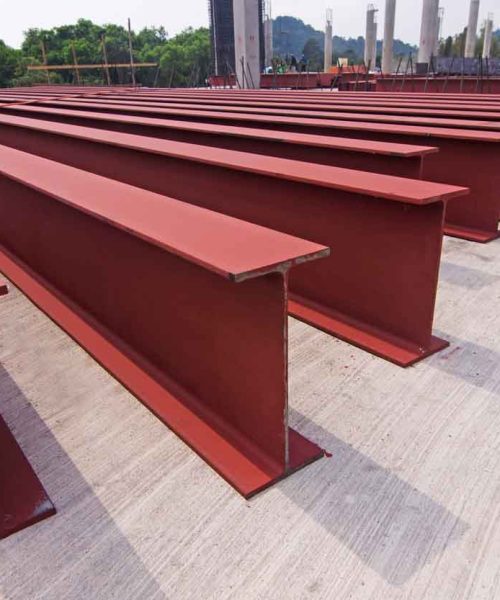
Red Iron metal buildings are structural steel buildings made from heavy I-beam steel columns and rafters. The term “red iron” comes from the red oxide primer typically applied at the steel mill.
Unlike light-gauge or tubular steel buildings, red iron structures use true structural steel framing, similar to what’s used in commercial warehouses, manufacturing facilities, and large agricultural buildings.
In simple terms:
Red iron buildings are designed to be stronger, last longer, and span wider distances with fewer
interior supports.
II. Why Customers Choose Red Iron Buildings
Customers typically choose red iron buildings when they want long-term value, maximum strength, and design flexibility.
Common Reasons Customers Upgrade to Red Iron:
Red iron is often chosen by business owners, farmers, storage developers, and homeowners building barndominiums or large shops.
They want a permanent structure, not a temporary one
They need wide open interior space
They plan to add on later
They want a building that holds its value
They need to meet commercial or industrial requirements
III. Major Structural Advantages of Red Iron Buildings
1. Superior Strength & Load Capacity
Red iron buildings are engineered to handle:
High wind loads
Heavy roof loads
Crane loads (if needed)
Large clear spans
This makes them ideal for Texas weather and large-footprint buildings.
2. Clear Span Interiors
Because the steel frames carry the load, red iron buildings can span 40, 50, 60 feet or more without interior columns.
Benefit:
More usable space, easier equipment layout, and better flexibility for future changes.
3. Long-Term Durability
Red iron steel does not rot, warp, or suffer insect damage. With proper coatings and maintenance, these buildings can last 50+ years.
4. Design Flexibility
Red iron structures can be customized with:
Multiple roof slopes
Lean-tos and expansions
Large door openings
Mezzanines
Future add-ons
This makes them ideal for growth-minded owners.
5. Increased Property Value
Because red iron buildings are considered permanent structures, they often:
Appraise higher
Are easier to insure
Add real value to the property
This makes them ideal for growth-minded owners.
IV. Weld-Up vs. Bolt-Up Red Iron Buildings
There are two main types of red iron structures. Both are strong — the right choice depends on location, timeline, and permitting requirements.
V. Weld-Up Red Iron Buildings
What Is a Weld-Up Structure?
A weld-up red iron building is fabricated on site. Individual steel components are cut, fitted, and welded together during erection.
Advantages of Weld-Up Buildings
Lower material cost
Faster material availability
Ideal for rural / outside city limits projects
More flexibility during construction
No long factory lead times
In many areas outside city limits, weld-up structures do not require full engineered building packages, which can significantly reduce cost and lead time.
Disadvantages of Weld-Up Buildings
Typically not accepted inside city limits
Less standardized documentation
Requires skilled welders on site
Not ideal for highly regulated commercial projects
VI. Bolt-Up (Pre-Engineered) Red Iron Buildings
What Is a Bolt-Up Structure?
Bolt-up buildings are pre-engineered metal buildings (PEMBs) manufactured in a factory. Components are designed, drilled, and fabricated off-site, then assembled using bolts on site.
Advantages of Bolt-Up Buildings
Fully engineered and stamped
Easier to permit in cities and municipalities
Predictable installation process
Ideal for commercial, public, or regulated projects
Easier to finance and insure
Disadvantages of Bolt-Up Buildings
Longer lead times (often 14–16 weeks)
Higher upfront cost
Less flexibility once fabricated
Changes after manufacturing are expensive
VII. Choosing the Right System
There is no one-size-fits-all answer.
The right choice depends on:
Location (inside or outside city limits)
Timeline
Budget
Intended use
Future expansion plans
An experienced red iron builder can help determine which system provides the best value, not just the lowest price.
🔧 PRO TIP: Weld-Up vs. Bolt-Up Red Iron Buildings
Feature Comparison
| Feature | Weld-Up Red Iron | Bolt-Up (Pre-Engineered) Red Iron |
|---|---|---|
| Best Used For | Rural properties & projects outside city limits | City, commercial, and fully permitted projects |
| Engineering Required | Often not required outside city limits | Always required |
| Material Lead Time | 7–10 days in most cases | 14–16 weeks typical |
| Overall Cost | Lower upfront cost | Higher upfront investment |
| Construction Method | Built & welded on site | Factory-fabricated, bolted on site |
| Design Flexibility | High flexibility during construction | Limited once fabricated |
| Permitting Ease | Simple in rural areas | Easier inside cities |
| Structural Strength | Extremely strong when properly built | Extremely strong and standardized |
| Future Modifications | Easier to modify or expand | Changes can be costly |
| Best Customer Fit | Cost-conscious, timeline-driven | Commercial, financed, regulated |
⚠️ Important Note
Outside city limits, weld-up red iron structures can often:
Reduce lead time by months
Lower building costs by 30–35%
Provide the same strength when properly built
Inside city limits, bolt-up engineered buildings are usually required to meet local code and inspection standards.
Copyright 2026 | RampUp Metal Buildings